Overview
See where and why machines stop on a textile production line, while it is happening.
- Posted by
- Textile manufacturer · Bulawayo
- Location
- Bulawayo (factory access for matched teams)
- Sub-theme
- Manufacturing & Industrial Modernisation
- Team size
- 2–6 people
- Pilot budget
- US$18,000
- Applications close
- 8 Jan 2027
The problem
Background
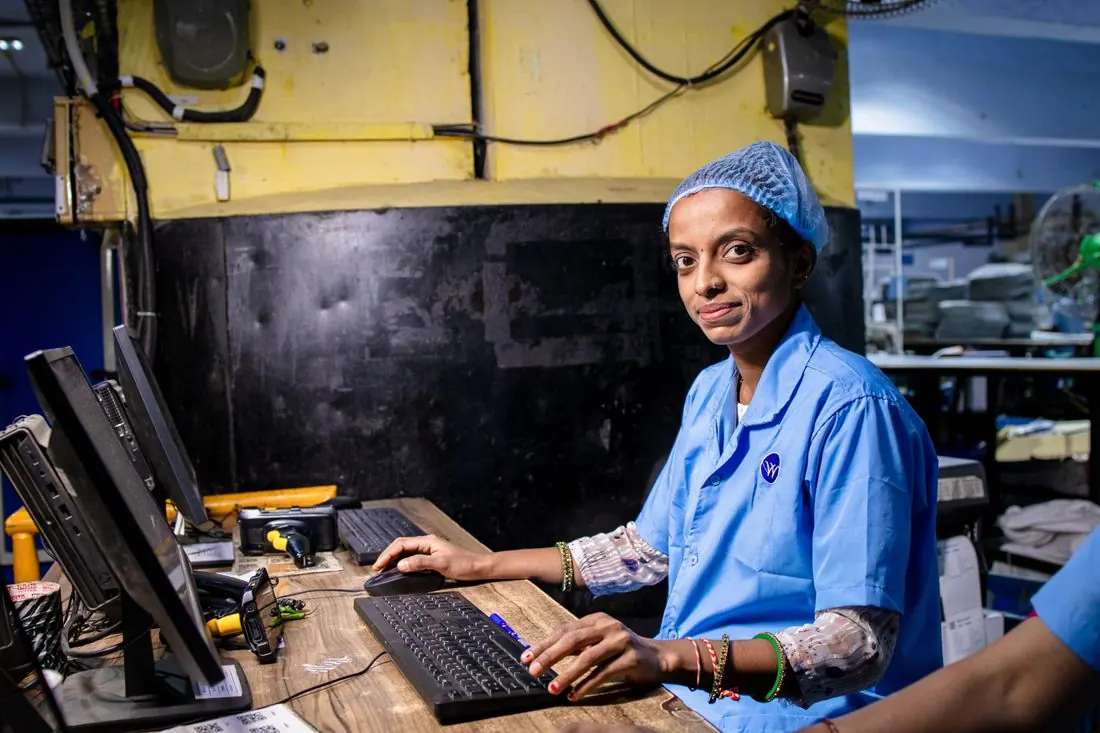
The manufacturer runs knitting and sewing lines in Bulawayo with a mix of new machines and machines that are decades old. Supervisors record downtime on paper at the end of each shift.
What's going wrong
The paper records are incomplete and arrive too late to act on. Management cannot tell which machines, products or shifts lose the most time, so maintenance and spare-parts spending is guesswork.
What we need
A strong solution will:
- Capture machine run and stop time automatically, including on older machines.
- Record a reason for each stop with minimal effort from operators.
- Show live and weekly downtime by machine, line and shift.
- Keep the cost per machine low.
Constraints
- No changes to machine safety circuits.
- Power cuts are common, so devices must recover on their own.
- Operators work in noisy conditions; inputs must be simple.
Deliverables
By forum week, matched teams are expected to bring:
- A prototype installed on at least two machines during the build phase.
- A downtime dashboard.
- Install cost and a plan for the full line.
- A seven-minute pitch for forum week.
How teams are evaluated
Applications and final pitches are scored by the challenge owner and the ZBIF secretariat on:
-
Fit to the problem30%
Does it solve the problem as the challenge owner describes it?
-
Technical feasibility25%
Can the team build and run it with the resources available?
-
Cost and scalability20%
Is it affordable to pilot, and to roll out if the pilot works?
-
Team capability15%
Does the team have the skills and time to deliver?
-
Local impact10%
Jobs, skills or value it keeps in Zimbabwe.
Who can apply
- A registered ZBIF innovator account: innovators, consultancies, technologists, university teams or freelancers.
- At least one team member based in Zimbabwe.
- Able to attend forum week in Bulawayo on 27–28 April 2027 if shortlisted.
- IP ownership and pilot terms are agreed between your team and the challenge owner in the Deal Room.
Timeline
- 30 Sep 2026 Challenge posted We are here
- 8 Jan 2027 Applications close
- Within 3 weeks Matching results sent to teams and the challenge owner
- Until mid-April 2027 Build phase, with mentor and challenge-owner check-ins
- 27–28 Apr 2027 Live pitch and Deal Rooms at forum week, Bulawayo
Data and resources
Shared with matched teams after signing a simple data-use agreement.
-
Factory floor access For matched teams
-
Six months of paper downtime logs Scanned PDFs
-
Production engineer as point of contact Weekly check-in
Questions about this brief?
Sign in to ask the challenge owner. Answers are shared with every applicant.